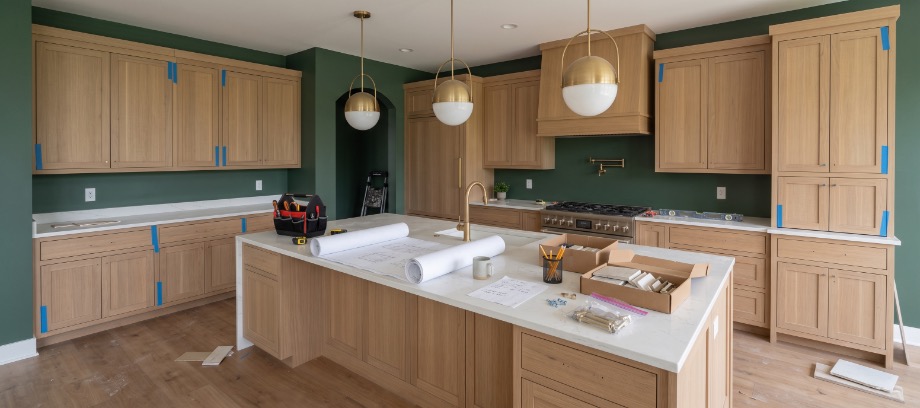
Why Your Remodel Starts Months Before Anyone Swings a Hammer
There's a moment when a remodel stops being an idea and turns into a plan. You've saved the photos, you've talked it through at dinner more than once, and now you want to know when someone could start. The answer usually lands somewhere between "sooner than you'd like" and "that can't be right." The gap between signing a contract and hearing the first hammer isn't dead time, and it isn't a sign the company is too busy for you. It's the reason the kitchen you've been picturing arrives in one continuous stretch of work instead of sitting in pieces for a month while everyone waits on a cabinet order.
Lead time is two clocks running at once
Most people assume lead time means how backed up a contractor is. That's half of it. The other half is how long the materials take to show up, and those two clocks have to be synchronized.
Cabinetry usually carries the longest wait of anything in a kitchen. Tile coming from Italy can stretch further. Countertops, hardware, plumbing fixtures: each one has its own timeline, and those timelines shift with tariffs, shipping, and whatever the supplier's backlog looks like that month.
Here's where the question gets interesting for you as a homeowner. Somebody has to watch both clocks. In a lot of arrangements, that somebody is you. You hire a contractor, you order your own cabinets through a showroom, you find out in week three that the vanity is on backorder, and you're the one making phone calls while a crew waits in your hallway.
One company holding both clocks
A design-build firm runs differently because design and production sit under the same roof. The designer helping you pick tiles can see the production calendar. The person ordering materials works down the hall from the person scheduling crews. Nobody has to guess what anyone else committed to.
That structure produces something you can use: a start date and a finish date, given together. We book the production schedule out further than our materials take to arrive, on purpose, so that when your project reaches the top of the calendar every piece it needs is already sitting in our warehouse. Once we start, we stay until the work is done. That promise is only possible because of the months that came before it. If you want the fuller version of how the two models differ, this breakdown of design-build versus a general contractor covers it.
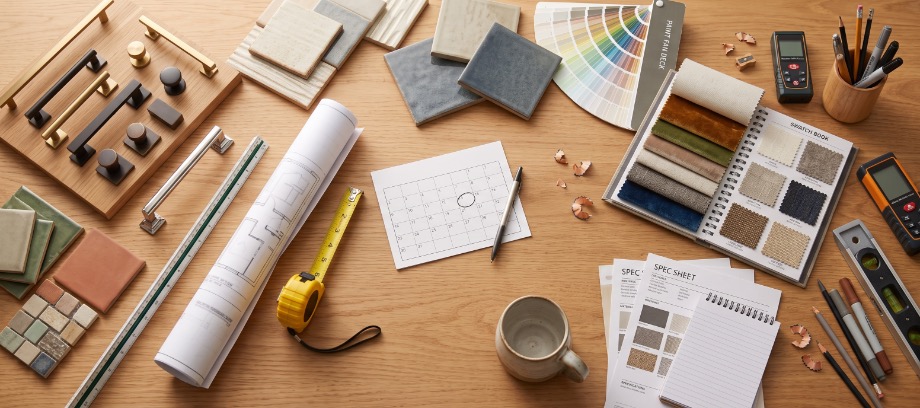
What's happening during the months you don't see
From the outside, that stretch between signing and starting looks like nothing. It's the busiest part of your project, and none of the work falls to you.
A production manager holds the master schedule and decides where your job lands so it doesn't collide with anyone else's. A production assistant stays in touch with you from signed contract through the first day on site, which means you're not left wondering whether you've been forgotten. Someone places every order, tracks it, and chases the ones that slip. The warehouse team receives each piece, checks it against your plan, and stages it so nobody discovers a missing end panel on demo day.
You get the benefit of that work in a specific form: a shorter stretch of time when your kitchen doesn't function, one number to call, and no supplier chasing on your calendar. Our whole process is built to keep the disruption to your daily life as compact as we can make it.
What to do with this
If you have a date in mind, a graduation, a holiday, a baby, start the conversation earlier than feels necessary. Not because we're slow, but because the calendar and the supply chain both need runway, and the earlier you're in the queue the more choices stay open to you.The earlier you start, the more of your list stays on the table.
Come see us at the Ann Arbor or South Lyon design center and we'll give you the current timeline, not a guess. And if you want to know what that first meeting looks like, here's what to expect.
Let's discuss